Patient Story: Kinsley Spencer
Six-year-old Kinsley Spencer loves going to the beach, camping, and spending time with her younger sister, Kallie. Kinsley has cerebral palsy (CP), which affects her movement, balance, and muscle control, but as a kindergartner she doesn’t let her condition hold her back from doing the activities she enjoys. Together, the family goes on adventures, exploring everything their home state of Maine has to offer.
Part of Kinsley’s condition that she is immunocompromised and requires complex care. Planned trips to Boston with her mom, Kate, are a common occurrence for Kinsley, who visits specialists regularly to help manage her CP.
On February 14, 2025, Kinsley was in Boston for hip surgery at Boston Children’s hospital. The following day, Kate and Kinsley, as well as Kinsley’s grandmother, began the drive back to Maine, unaware that they would be back in the same hospital later that day.
As Kate drove home, Kinsley began to cough in the backseat. Kinsley’s grandmother tried to help clear the child’s airways by suctioning out some of the phlegm that had built up. However, Kinsley’s condition quickly worsened.
“Then Kinsley started working hard to breath,” said Kate. “That’s what prompted us to say, okay, it’s time to go to the hospital now. I attempted to drive there but was not able to because she got really bad, really, really quickly.”
Kate called 911 and met up with an ambulance in Lisbon. Multiple first responders came to help load Kinsley into the ambulance and take over her care. “Her heartrate was a little over 200 beats per minute,” Kate remembered. Kate rode in the ambulance with Kinsley as she was transported to Central Maine Medical Center (CMMC) in Lewiston.
By the time Kinsley arrived at CMMC, her condition was still deteriorating. Doctors determined she had respiratory syncytial virus (RSV). RSV is a common virus that affects a person’s lungs and airways. Many people contract RSV at some point in their lives, and young children are particularly susceptible. However, with Kinsley’s weakened immune system, the virus caused serious complications. She began choking on phlegm, which was building up in her airway.
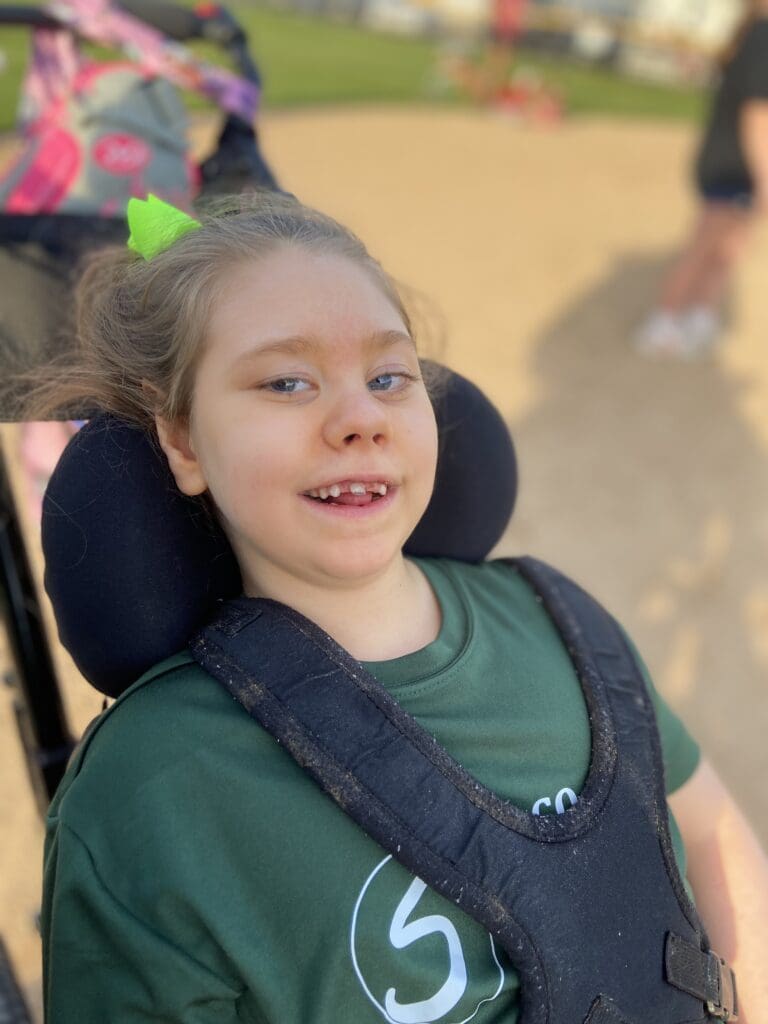
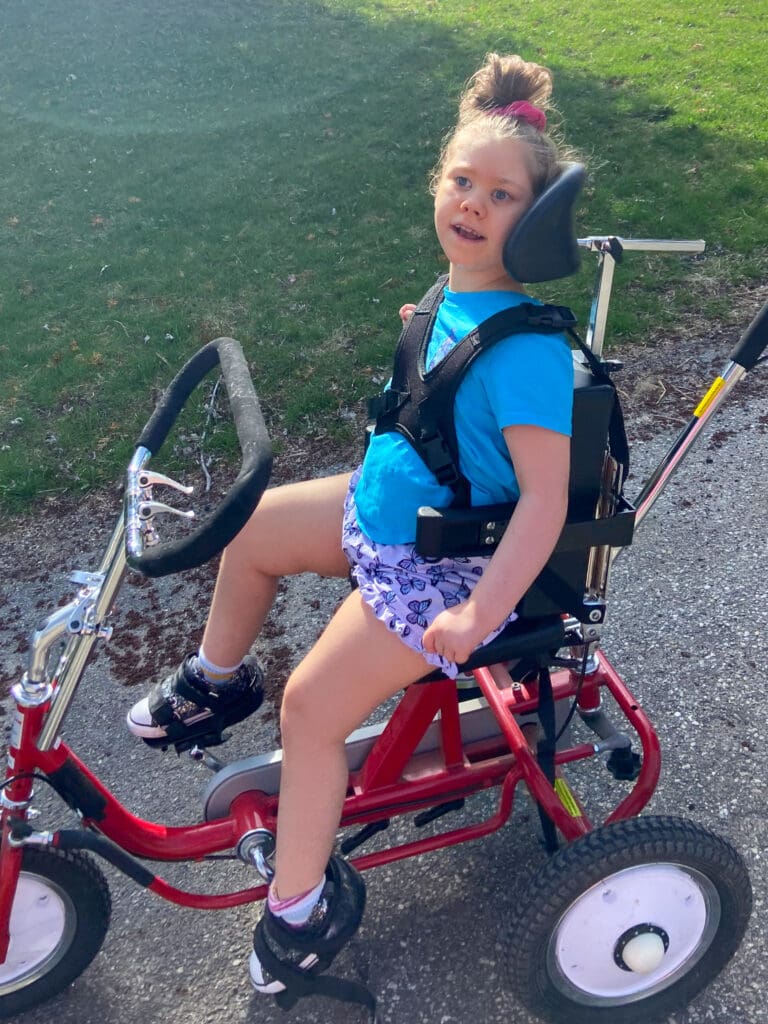
LifeFlight patient Kinsley Spencer. Photos Courtesy: Kate Spencer.
At the hospital, Kinsley was put on high-flow oxygen to help her breathe. Kate says her daughter soon started to look a little bit better, so she wanted to begin to feed her. While Kinsley eats some by mouth, Kate says her daughter primarily uses a gastronomy tube (G-tube) to get the nutrients she needs. The tube goes directly into Kinsley’s stomach, bypassing her mouth and throat. Kate set up the G-tube feed at the hospital and started the process. However, after only consuming a small fraction of the nutrients, Kinsley began vomiting.
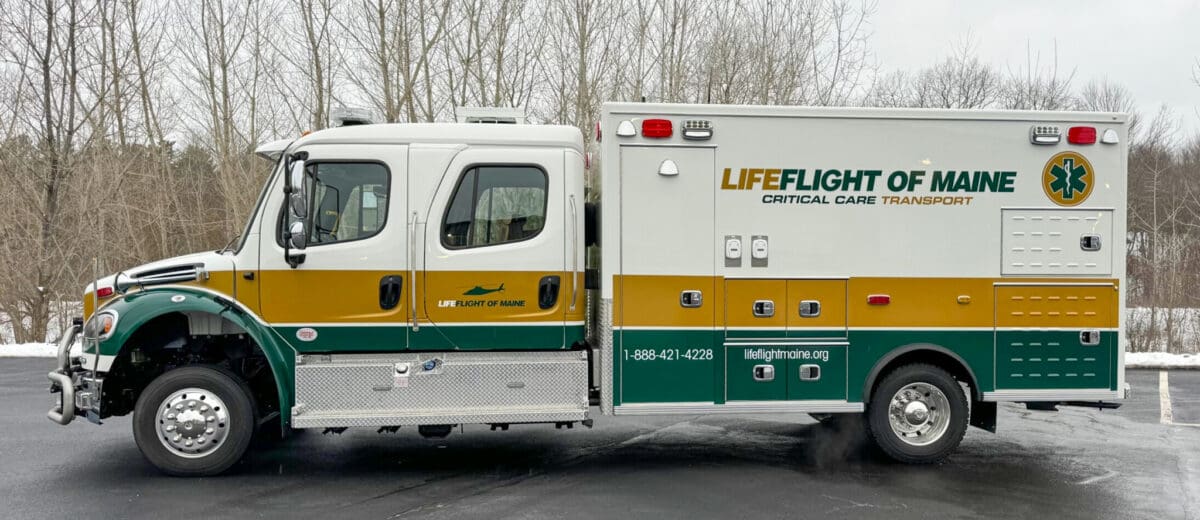
The care team at CMMC told Kate that Kinsley needed to be intubated and transported to Boston Children’s Hospital for a higher level of care. Unfortunately, this was in the midst of a snowstorm, so Kinsley was transported in one of LifeFlight’s ground ambulances, which is able to safely transport patients in weather conditions unsuitable for helicopter aviation.
Flight paramedic Alex Lynch was at CMMC for her shift and was doing rounds through the hospital. LifeFlight, which uses a helipad outside of CMMC and has an office in the building, has a strong, longstanding partnership with the hospital. When the Lewiston-based flight crew is not transporting a patient, the LifeFlight clinicians often serve as extra sets of hands in the hospital, helping doctors and nurses when needed. Alex was in the emergency room at the same time Kinsley and her family came in.
Alex, who is a mother herself, immediately understood how stressed the family was and wanted to help in any way she could — whether by providing medical care or emotional support. She answered a few of Kate’s questions about the upcoming transport and offered to stay with Kinsley during her intubation, as Kate was not allowed to be in the room for the procedure.
“I didn’t provide patient care in this instance, but I knew how stressed mom was and I knew how stressed grandma was, and I wanted to see what I could do to help,” said Alex. “I promised I would stay with Kinsley, and that I would hold her hand while the doctor performed the procedure.”
“Alex was amazing. She stayed with Kinsley when they intubated her, so she wasn’t scared,” Kate said. “That made me feel a lot better, knowing she was in there with her.”
Alex stayed with the family while they waited for her LifeFlight colleagues to transport Kinsley to Boston. “She was so awesome, and so caring and empathetic,” said Kate.
Around nine o’clock that night, flight nurse Katie Sturgis and flight paramedic Jared Miller began the trip with Kinsley to Boston Children’s. Kinsley needed a higher level of treatment for both aspiration pneumonia and RSV. The LifeFlight crew continued the ICU-level care during transport that Kinsley was receiving at CMMC — each LifeFlight vehicle is equipped as a mobile ICU with the advance medical equipment and highly-skilled clinicians capable of delivering the highest level of out-of-hospital care.
“She was super, super pale. She looked bad overall. I am thankful that LifeFlight stepped in,” said Kate, who was able to ride in the front seat of the ambulance. In the back, Kinsley was safe, stable, and had started receiving an antibiotic.
“They took great care with her,” Kate recalled. “I didn’t even hear her monitor beep once on the way down. They had everything under control.”
Jared, the flight paramedic, kept in contact with Boston Children’s Hospital during the ride. He continued to update Kate and reassure her that her daughter was doing okay throughout the nearly three-hour drive.
When the ambulance got to the hospital, the LifeFlight crew went to the ICU with Kinsley to update her care team in Boston.
“LifeFlight made a really stressful situation a lot easier on us,” said Kate. “I can’t thank them enough.”
Kinsley spent two weeks in the hospital recovering from RSV and aspiration pneumonia before she was discharged and went home.
“I think it was such a bad strain of RSV this year that it just knocked everyone down,” said Kate, and especially those with already complex medical conditions. “The whole ICU in Boston literally was children who were sick with flu and RSV. And the majority of them were intubated. They said this was the worst they’d ever seen.”
With some lingering symptoms from RSV, Kinsley went home to continue her recovery in Maine. The family is now enjoying summer in Vacationland, full of beach days, camping, and other adventures. Soon, Kinsley hopes to visit the LifeFlight hangar to meet the team that helped her return to her spirited self.