We Must Do Better. Our Lives Depend On It.
By Joe Kellner, CEO of LifeFlight of Maine
A version of this appeared as an op-ed in the Portland Press Herald on November 3, 2025.
I am concerned for our country’s healthcare system. I am worried that in ten years, despite the incredible promise of technology and medicine, millions of Americans will have less access to high quality healthcare than they do today. I am especially anxious about how quickly that access may dwindle as you get farther from our cities.
As the CEO of LifeFlight of Maine, I lead the only healthcare organization that serves every community and hospital in the state. I have worked in EMS in Maine for more than two decades, first as an emergency medical technician in the back of an ambulance and more recently in finance and administration. I’ve been to hundreds of Maine communities and all 35 of its hospitals. I can see what’s happening on the ground and from ten thousand feet in the air. I don’t have the answer, because there is no singular solution to the challenges facing healthcare. However, I am intimately familiar with the issues, and I believe there is reason to hope, because I believe we can do better.
First, the challenges, and there are many. The most obvious are financial. Reimbursements from health insurers, both public and private, often do not cover the cost of care. This issue is especially acute in rural EMS, for example, where about two- thirds of patients are covered by government payors (i.e. Medicare and MaineCare, Maine’s version of Medicaid), while reimbursements from those payors, which are established at the federal level, cover only about one third of the costs. That means that, on average, rural EMS providers like LifeFlight are operating at a loss for the majority of the patient transports they complete.
It’s simplistic to say that those providers should merely reduce their costs, because it’s also the cost of readiness — it might be easier if we knew exactly when someone was planning to have a medical emergency. EMS agencies like LifeFlight of Maine have a profound public responsibility. We cannot simply tell someone who has called 911, “Sorry, we’re closed. Call back in the morning.” We made a promise to show up, which is what we do every day and night.
The challenges of working with private insurers are well documented and much discussed. Contested claims, delayed payments, and obstinate negotiating tactics are the norm, none of which does anything to help patients or providers. Meanwhile, considerable costs are passed on to patients in the form of high premiums, high deductibles, and even higher out-of- pocket maximums.
Many patients have no insurance coverage at all, and we expect to care for more uninsured people in the future when recent changes to Medicaid funding take effect. What we do at LifeFlight of Maine is undeniably expensive. We provide ICU-level care in an aircraft to some of the most acutely ill or injured patients in the state. Most of our patients cannot afford the care we provide — most Americans couldn’t. As a nonprofit, we provide them with the best possible care, regardless.
We do everything we can at LifeFlight of Maine to keep our fees low while still covering our costs. The difference between our average cost per transport (not including capital investments) and average revenue collected is less than $50 — there are no shareholders turning a profit from our work. We continue to operate only because we have many generous supporters who contribute philanthropically.
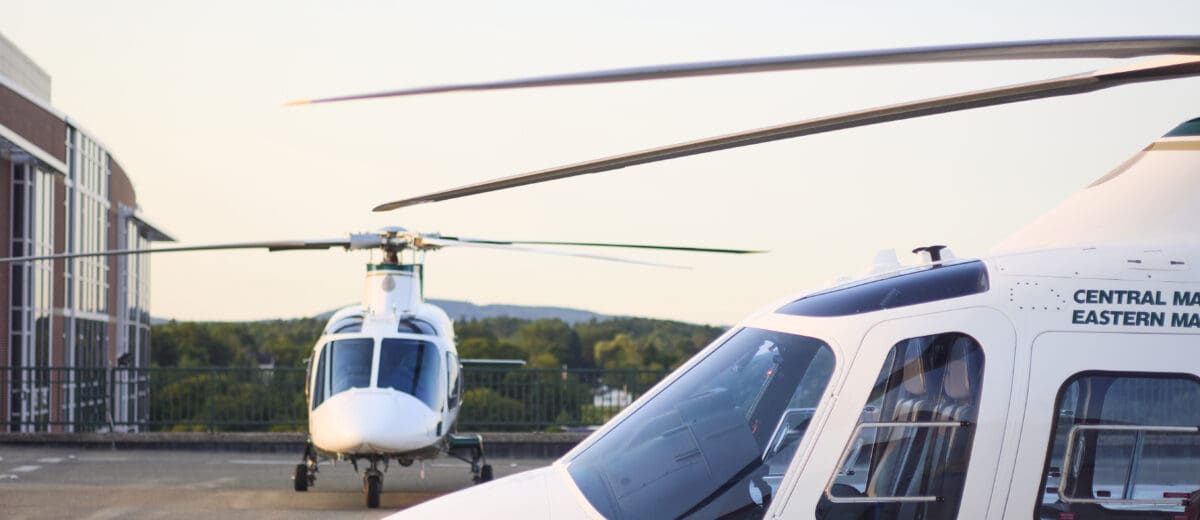
Meanwhile, costs continue to rise. Inflation has affected most industries, and healthcare is no exception. Tariffs are also taking their toll. We operate Leonardo A109 helicopters, which are manufactured in Italy. The Pratt and Whitney engines in the aircraft are made in Canada. Each engine costs nearly $1 million before tariffs and there are two in each of our helicopters. Even if we could find American-made alternatives for aircraft or engines, it would take nearly five years to put them into service from the time we placed the order. The impact of inflation and tariffs is being felt across the healthcare sector, exacerbating challenges for already struggling services and providers.
If there’s cause for hope, and I believe there is, it lies in debunking one common misconception about the healthcare system, namely, that “the healthcare system” is some huge conglomerate out there — the proverbial “they” — making decisions about our health and healthcare. What we mean colloquially by “the healthcare system” is, in reality, a collection of agencies, private companies, nonprofits, public servants, and people. Yes, many of them have profit motives, and some are outright greedy. Yes, it is messy and doesn’t function as efficiently as we would like. But, in my experience, the “system” is also made of up thousands of doctors, nurses, paramedics, helicopter pilots, ambulance operators, administrators, and healthcare professionals of all kinds who are dedicated, compassionate, creative, exceptional at what they do, and remain deeply invested in providing the best care possible to their patients.
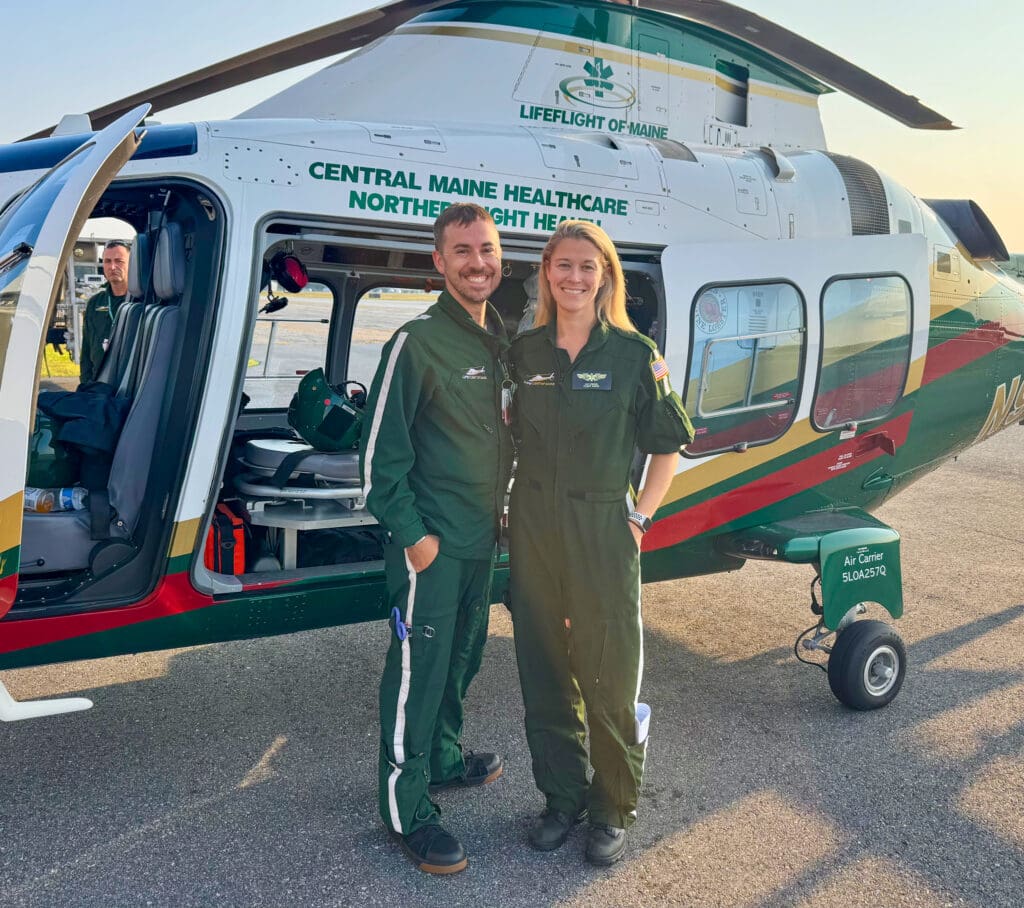
Left: flight paramedic Geoff Greenlaw (left) and flight nurse Jen O’Brien (right); photo courtesy of EMT Vehicle Operator Ben Rayer.
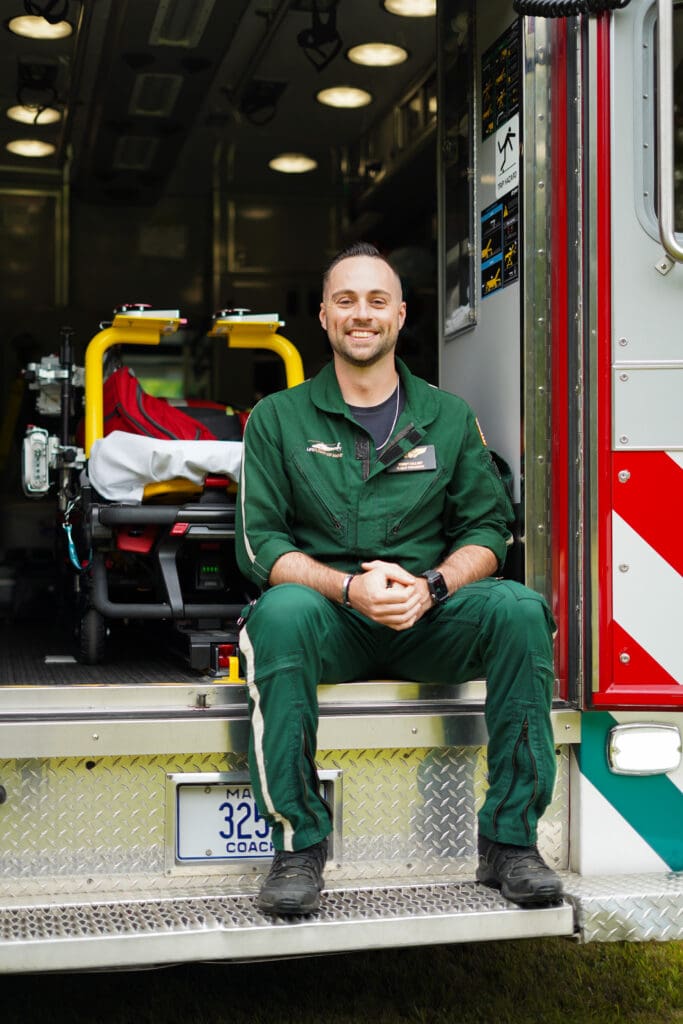
Right: flight paramedic Tommy Gallant.
I see the dedication of these professionals every day when I come to work. Our helicopters are big, loud, and exciting to see in action, but they are merely a tool. The clinicians in the back and the pilot up front are the very best at what they do. I would unequivocally trust any one of them with the lives of my children. Our support teams on the ground, including our highly- skilled mechanics and communication specialists, are dedicated to ensuring our crews and patients remain safe.
Our crews at LifeFlight of Maine are trained to handle just about any situation they face. They can replicate what happens in an emergency room in the best hospitals in the world at the intersection of two logging roads in the Maine woods 50 miles from the nearest town. They can bring ICU-level care to the bedside of a patient in a small, rural hospital in the middle of the night.
This level of care is prohibitively expensive for most Maine hospitals, beyond the major medical centers in the state’s largest cities. By putting it in an aircraft, we can deliver it to the point of need quickly, making critical care available statewide every hour of the day. We are always try ing to ensure sustainability at LifeFlight of Maine so that we can continue to be that safety net. We are always looking for ways to improve, for creative solutions to the challenges we face, and to provide the best care possible to each person who entrusts their life to us. Mostly, we accomplish this by giving our crews the tools they need to succeed.
There is no singular solution to the challenges our healthcare system is facing, and I am deeply concerned about what access to healthcare will look like in the future. Everyone, regardless of where they live, deserves access to the care they need, when they need it. Behind the headlines, the life-threatening challenges, and the urgent needs, there are so many incredible people working tirelessly to care for us in our hour of need. I am proud to work alongside many of them, and we should make every effort to invest in them and their success, because our lives one day may very well depend on it.